Pick the tile for the job it has to do
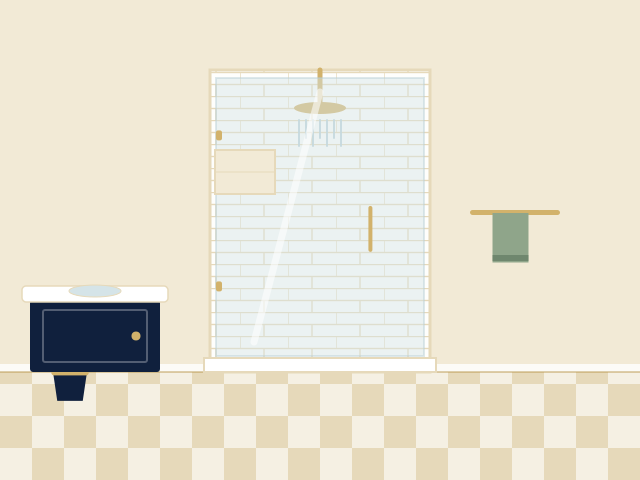
A tile that looks right on a showroom wall can behave very differently on a wet floor. Think about where each tile will live: the floor, the shower wall, the shower floor or a dry accent wall. Each place asks something different of it.
| Tile type | Strengths | Trade-offs |
|---|---|---|
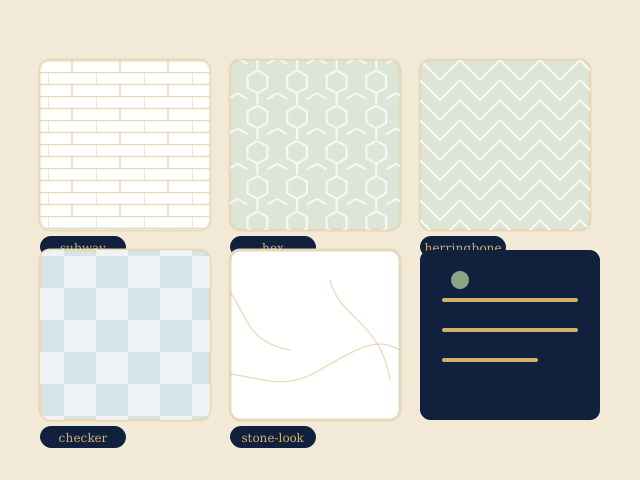
| Porcelain | Very dense, low water absorption, works for floors and walls, many looks including stone and wood | Harder to cut, can be less forgiving to install if oversized |
| Ceramic | Wide range of colors and glazes, generally easier to cut, a common wall choice | Less dense than porcelain; check the rating for floor use |
| Natural stone | Distinctive veining and depth, durable when maintained | Needs sealing, can stain or etch with some cleaners |
| Glass mosaic | Reflects light, useful for accent walls and niches | Shows adhesive and uneven setting; best on a flat surface |
| Cement-style or patterned tile | Statement floors and feature walls | Pattern repeats must be laid out carefully; confirm it's rated for wet areas |
Slip resistance: a number worth asking about
For level interior floors expected to be wet, the tile industry's standard (ANSI A137.1) recommends a dynamic coefficient of friction (DCOF) of at least 0.42. Many manufacturers list it in their spec sheets. A glossy polished floor tile can look wonderful and feel slick when wet, so ask for the number rather than relying on how it looks.
Smaller tiles, like mosaics, add more grout lines and therefore more grip, which is why they're so often used on shower floors.
What's under the tile matters most
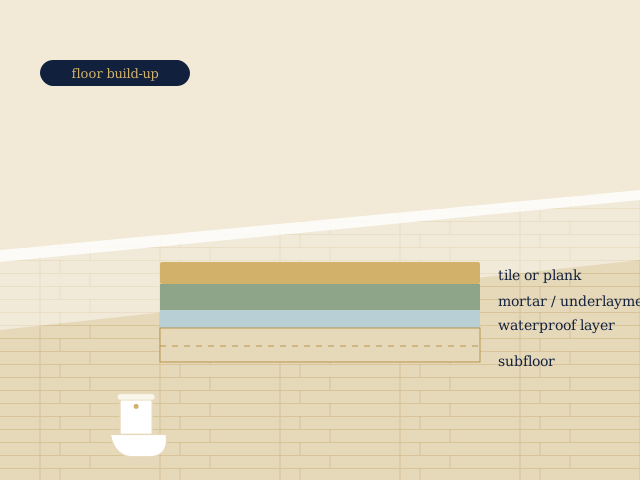
A shower isn't waterproof because of the tile and grout. Grout is porous. What keeps water out of the wall is the waterproofing layer behind it: a sheet membrane, a liquid-applied membrane or a foam board system. Whatever system your provider uses, the key questions are straightforward:
- Is there a continuous waterproofing layer across the walls and the shower floor?
- Are corners, seams and the drain connection treated according to the manufacturer's instructions?
- Will the shower pan be flood-tested before tile goes on?
- Is the floor slope toward the drain at least 1/4 inch per foot?
- For floors, is the subfloor stiff enough that the tile won't crack? Over-flexy floors are a common cause of failure.
Heated floors, if you want them, go in before the tile and need a dedicated GFCI-protected circuit. Mention them at the start.
Layout is where installers earn their keep
Where you start decides what you see
A careful installer doesn't just begin in a corner. They dry-lay the tile, find the center of the wall or the focal point and adjust so cut tiles at the edges aren't slivers. That's why you may be asked where you'd prefer the pattern to center.
Large-format tile
Tiles larger than 15 inches on a side are popular because there's less grout. They also demand a flat substrate, so you may see the installer flatten walls or floors first. That adds time, not waste.
Grout and sealing
Standard cement grout is the usual choice and some natural stone and cement grouts benefit from sealing. Epoxy grout resists stains and moisture well and costs more and is harder to work with. Chilled-white or light grout shows more soil than a mid-tone gray.
Movement joints
Where walls meet floors and in the corners, a flexible sealant, not rigid grout, absorbs normal movement. If you see hard grout in those joints it's likely to crack over time.
What a tile installation looks like in sequence
- Surface prep. Walls are flattened and cleaned; backer board or a membrane is installed.
- Layout and dry fit. The tile pattern is planned and marked.
- Setting. Thinset mortar is troweled on, and tile is pressed into place and checked for coverage.
- Grouting. After the mortar cures, grout is applied, then cleaned and cured.
- Sealing. Stone or porous grout is sealed; flexible sealant is applied at transitions.
Cosmetic floor tile on its own can sometimes proceed without a permit in Naperville, but tile that's part of a shower rebuild or any plumbing change falls under the city's alteration process. See the City of Naperville residential alteration guidance and ask each provider how they handle it. The provider network we connect you with can speak to details for your project, and our broader overview of bathroom remodeling services in Naperville shows where tile fits into the rest of the job.
Where tile fits into other projects
If you're only retiling a floor, see bathroom flooring installation to compare tile with other floor options. If tile is part of a bigger plan, such as a shower remodel, the waterproofing and the pan are as important as the tile.
Tile in homes of different ages
What's under old tile depends on when the house was built. The Knoch Knolls page has a guide by building era, and Springbrook explains how hard water affects grout and glass over time.