Measure these five things before you fall for a vanity
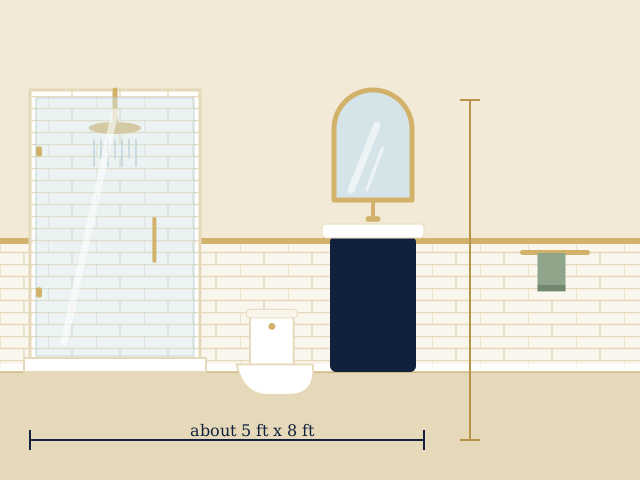
- Width of the wall space. Measure between the walls, tub or door trim, not the old vanity. Leave breathing room if there is a toilet beside it.
- Depth. Standard depth is around 21 inches. Compact versions are 16 to 18. In a narrow room, those few inches decide whether you can walk past comfortably.
- Height. Older vanities sit about 30 to 32 inches high. "Comfort height" models are 34 to 36 inches, closer to kitchen counters, and usually easier on the back for adults.
- Plumbing positions. Note where the supply lines and drain come out of the wall. A vanity with a full back panel can need cut-outs, and a drawer base might need a plumbing notch.
- Obstructions. Baseboards, outlets, window sills, light fixtures and trim on the door all affect the fit.
Freestanding, wall-hung or built-in
A freestanding vanity looks like furniture and is the easiest to replace later. A wall-hung one opens up the floor, which is great in small rooms, but needs solid blocking inside the wall. Built-in cabinetry is custom-fit and can make odd spaces useful, though it takes longer to design and install. If you're curious about how these choices feel in a smaller room, see our notes on small bathroom remodeling.
Sink, top and faucet: matching the pieces
Counter materials
- Quartz. Non-porous and low maintenance; resists staining. Heat from hair tools can still mark some surfaces.
- Granite or natural stone. Distinctive patterns, though stone usually needs periodic sealing.
- Solid surface. Seamless integrated sinks and easy repairs for minor scratches.
- Cultured marble. Budget-friendly with an integral sink; can dull over time.
Faucet holes
Vanity tops are pre-drilled for one style: single-hole, centerset (4 inch spread) or widespread (8 inch). A mismatch is one of the most common ordering mistakes, because the faucet you love might not fit the top you picked. Decide on the faucet and the top together.
Overflow and drain
If the sink has an overflow, the drain assembly must match. It's a small detail that's easy to miss and annoying to correct once everything is in place.
Stock, semi-custom or custom?
Stock vanities are quickest and cheapest. Semi-custom gives you size and finish choices. Custom lets you design for a specific wall, but lead times are long. Whichever you choose, ask your provider whether they order the vanity or you do, because that decides who handles damaged-in-shipping problems.
What good installation looks like
- The cabinet is leveled in both directions and fastened into wall studs, not just drywall.
- Shims are used where the wall or floor is uneven, then trimmed neatly.
- Supply lines and shutoff valves are new and tested, and the drain doesn't have kinks or poor slopes.
- The countertop is sealed to the wall and to the backsplash with an appropriate caulk.
- Doors and drawers are adjusted so they close and align.
- The faucet is tested for leaks and flow before the installer leaves.
Storage beyond the vanity
Linen cabinets, over-toilet shelving and recessed medicine cabinets all reduce counter clutter. Wall cabinets need to be anchored into studs, and recessed cabinets need a place between studs without pipes or wires. If you're planning a bigger overhaul, a provider can fold these into a broader plan to remodel your Naperville bathroom rather than doing them piecemeal.
Mirrors and lighting height
Place the mirror so its center sits near eye level for the main user. Sconces on both sides at about eye level give more even light on the face than a single light above, which tends to cast shadows. Any new fixture near a sink must be rated for damp locations, and bathroom receptacles need GFCI protection.
Is a permit involved?
Swapping a vanity in the same location without changing plumbing often doesn't need one. Moving plumbing or adding circuits does, according to the City of Naperville residential alteration guidance. If you aren't sure, ask the provider who'd handle it.
Choosing a vanity that fits the house
Condos and townhomes often call for smaller footprints, as the Tall Grass page discusses. If you're comparing quotes that include vanity allowances, the Heatherstone page explains how allowances can skew a bid.